About Me
I am an Eric and Wendy Schmidt AI in Science Postdoctoral Fellow at the University of Toronto. My PhD supervisor is Prof. Hongze Wang at SJTU.
Artificial intelligence is poised to redefine the next generation of artificial materials and engineering systems. In past ten years, I have developed an independent research program at the intersection of artificial intelligence, metamaterials, and additive manufacturing, aiming to build reliable AI systems that transform how artificial materials and structures are designed, understood, and programmed.
A central focus of my current research is the development of large-language-model-driven agents that integrate scientific reasoning, generative design, and human-like comprehension for self-driving discovery of new materials and structures for next-generation high-value applications such as robotics and aerospace engineering (see ChatMetamaterials ).
Research interests include:
- Large-language-model agents and AI systems for materials discovery
- Programmable mechanical metamaterials
- Soft robotics, smart robotic structures, and embodied intelligence
- Lightweight programmable aerospace structures
- Additive manufacturing
Research Gallery
Grants
-
 Logo unavailable
Eric and Wendy Schmidt AI in Science Fellowship, Canada, 2025 — CAD 170k
Logo unavailable
Eric and Wendy Schmidt AI in Science Fellowship, Canada, 2025 — CAD 170kGrant recipient; selected as one of approximately 160 fellows worldwide, including 11 in Canada. Research topic: “Inventing the Inventor: Agent-Based Metamaterial Discovery Based on Large Language Models.”
-
 Logo unavailable
NSERC Collaborative Postdoctoral Research Award, Canada, 2025 — CAD 140k
Logo unavailable
NSERC Collaborative Postdoctoral Research Award, Canada, 2025 — CAD 140kGrant recipient; selected among approximately 40 fellows annually across Canada. Research topic: “Agent-Based Metamaterial Discovery with Large Language Models.”
-
 Logo unavailable
National Natural Science Foundation of China, 2023 — RMB 300k
Logo unavailable
National Natural Science Foundation of China, 2023 — RMB 300kPrincipal Investigator (1/1); Grant No. 523B2048. Awarded to top 0.1% PhDs in China. . Research topic: design and additive manufacture of programmable thermo-mechanical integrated satellite metastructures.
-
 Logo unavailable
Shanghai Jiao Tong University Development Grant, 2025 — RMB 300k
Logo unavailable
Shanghai Jiao Tong University Development Grant, 2025 — RMB 300kGrant recipient, awarded to 5 candidates in SJTU. Research topic: AI-driven programmable design for mechanical metamaterials.
Publications
My publication record includes 21 journal articles, with 8 first-author papers focusing on developing next-generation AI-driven, especially LLM-driven metamaterials and structures for high-value applications.
View Google Scholar ↗First-author Publications
8 papersAdditional Published Articles
10 papersJournal Impact Factors are shown where currently available and should be refreshed annually. Paper media files are detected automatically from P1 through P18; entries without a matching file remain in the standard text layout.
Research Software Platforms
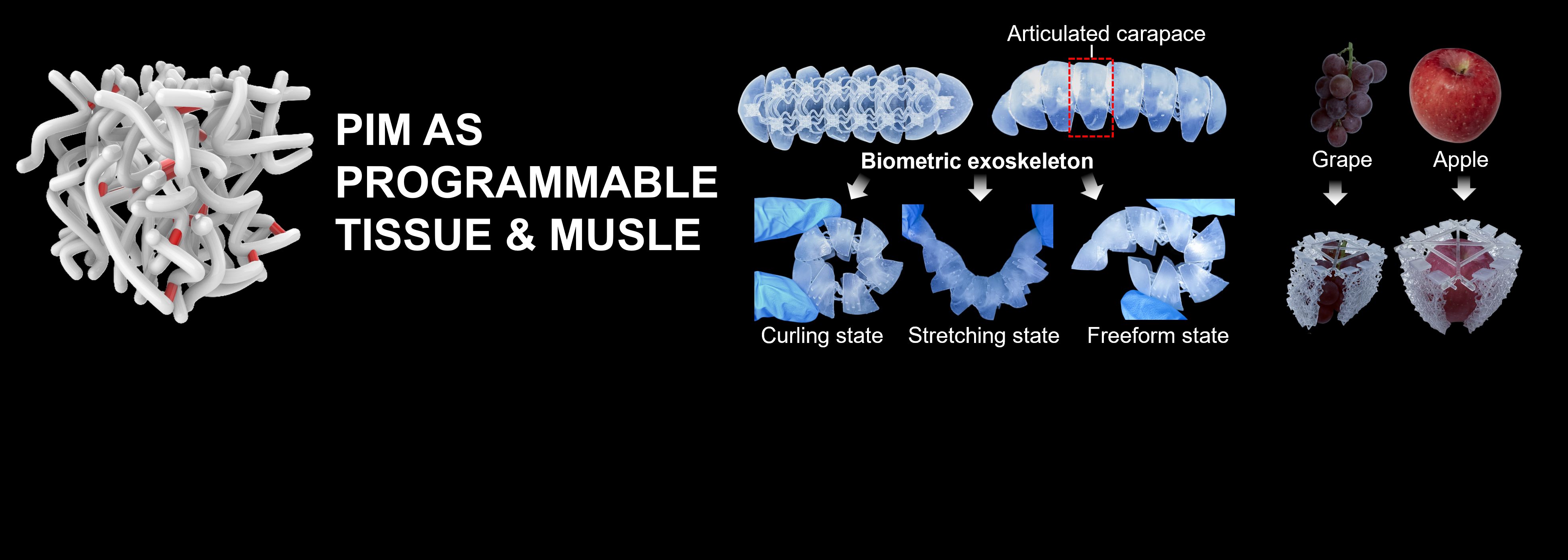
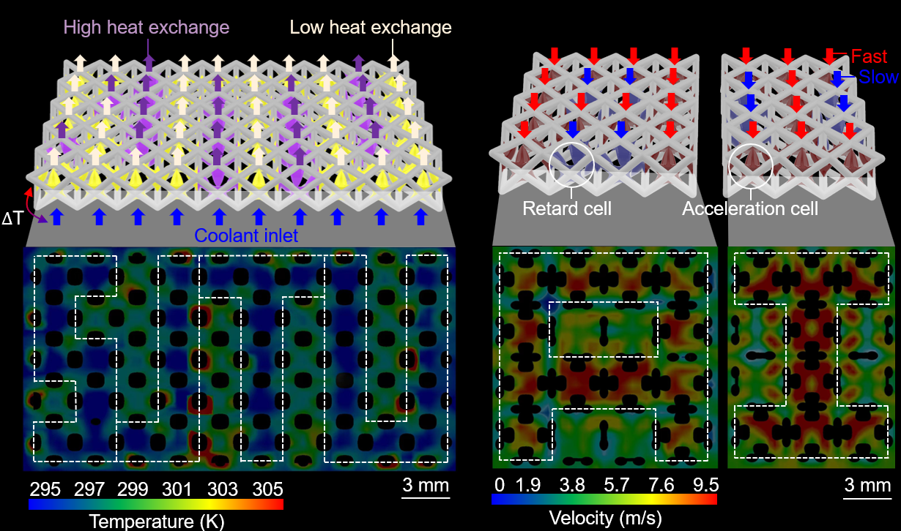
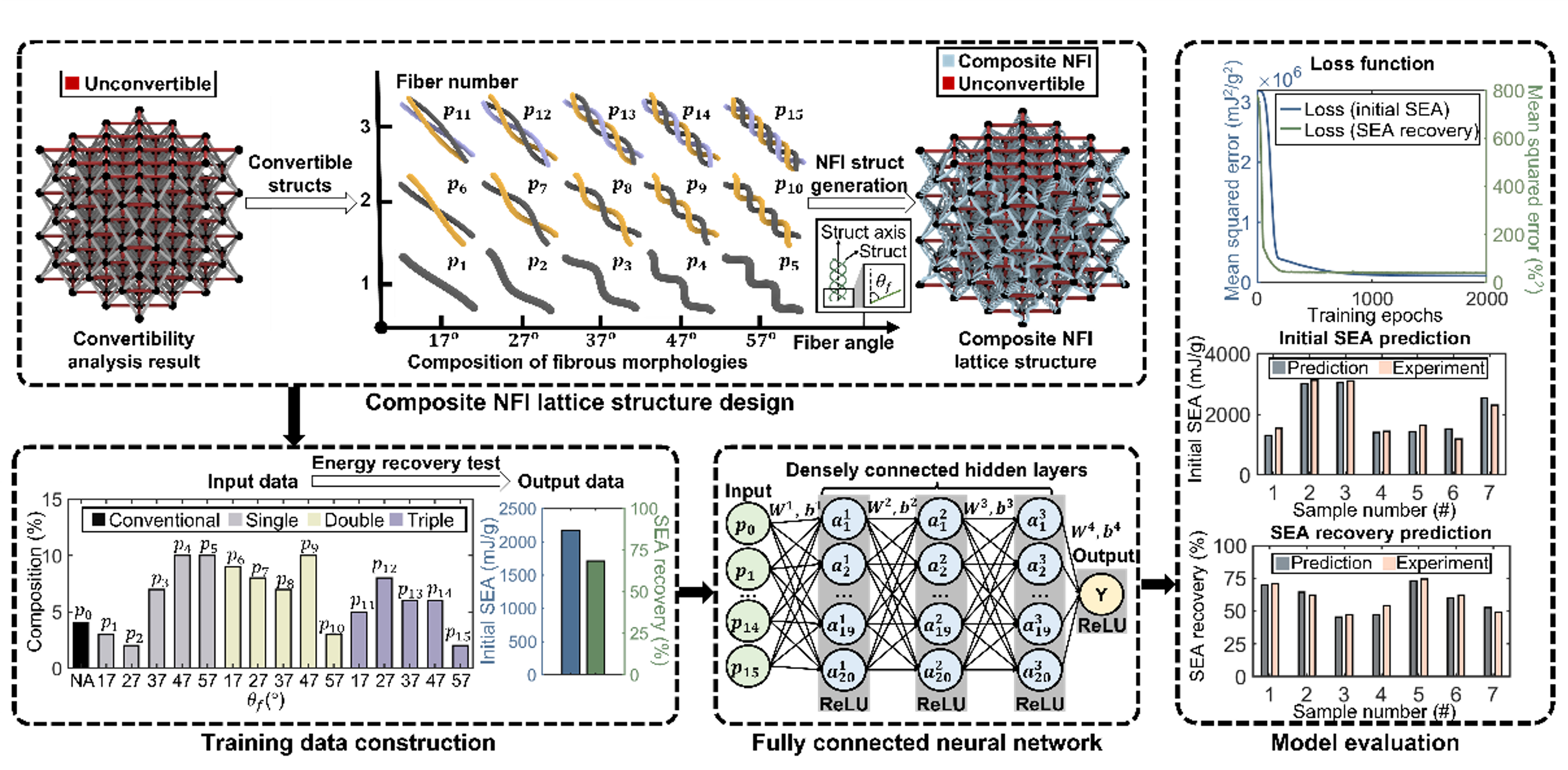
These platforms were conceived, founded, implemented, and maintained by Zhenyang Gao. Collaboration enquiries are welcome.

Awards
- Doctoral Innovation Award — Chinese Materials Research Society, China, 2026
- National Scholarship — China, 2024
- Outstanding PhD Graduate of Shanghai — Shanghai, China, 2025
- National Silver Award — 9th Internet+ College Students Innovation & Entrepreneurship Competition, China, 2023
- “Academic Star” Nomination Award — First Place — Shanghai Jiao Tong University, China, 2025
- State Key Laboratory of Metal Matrix Composites Research Award — Grand Prize — China, 2025
- State Key Laboratory of Metal Matrix Composites Research Award — First Prize — China, 2024
- State Key Laboratory of Metal Matrix Composites Research Award — Grand Prize — China, 2023
- SAMPE Bridge Contest — First Prize (Poster) — McGill University, Canada, 2019
- Dean’s Honours List — University of Waterloo, Canada, 2018
- China Scholarship Council Scholarship — 2023
Industrial Translation
My research translates AI-driven materials design into engineering-scale manufacturing, with a particular focus on robotics and aerospace applications. Representative outcomes include programmed lightweight robotic feet and leg structures based on NFI metamaterials; an additively manufactured aircraft cabin-door hinge arm achieving approximately 20% mass reduction; and a meter-scale aero-engine fan-blade demonstrator that validates the scalability of architected-material design and large-format laser additive manufacturing. Our ChatMetamaterials platform is also open to industrial collaboration, particularly for applications requiring sentence-to-component metamaterial design.
Contact
Research and collaboration
I am open to collaboration across AI for science, LLM agents, mechanical metamaterials, robotics, aerospace, additive manufacturing, and industrial translation.